
Reclaiming Your Best Smile: The Advanced Path to Dental Implant Confidence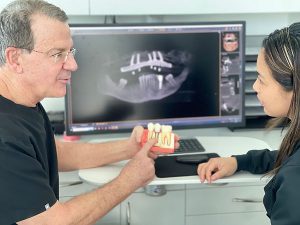
Are you living with the quiet frustration of a missing tooth, or struggling with dentures that just don’t feel secure? The search for a permanent, comfortable, and natural-feeling tooth replacement often leads to one definitive solution: the dental implant.
At Plaza PointeDental Specialists in Mukilteo, WA, we approach implantology not as a simple procedure, but as a commitment to restoring your complete function and radiant aesthetics. Led by Dr. Tracy Scott, ourlocal prosthodontist, we utilize sophisticated 3D imaging and comprehensive digital planning to create a stable, enduring foundation for your new tooth.
We extend a warm invitation to patients from Everett, Edmonds, and Lynnwood seeking the highest level of care for their implant needs. Call (425) 215-0001 to schedule your consultation with Dr. Scott.
Dental Implants: The Path to A Functional Smile
If your current situation involves painful compromises, the Plaza Pointe Implant Solution offers a definitive transformation:
- “I can only eat soft foods.”
- Our Solution: Unrestricted Joy. Achieve a near 100% natural chewing function. You can confidently bite, chew, and savor anything with the stability of a natural tooth root. During the healing time after implant surgery, you may need to eat soft foods to allow for proper recovery and ensure successful osseointegration.
- “I feel embarrassed to laugh.”
- Our Solution: Unshakeable Confidence. Receive a permanent, custom-designed smile that is securely anchored and will never slip, click, or shift during conversation.
- “I worry about bone loss.”
- Our Solution: Preserved Health. The titanium implant post stimulates and helps save your jawbone, maintaining your facial structure and supporting your long-term oral health.
Discover the Difference in Visiting Dental Specialists
When you visit our practice, you benefit from the combined knowledge and experience of these specialists. Whether it’s planning dental implants, restoring function, or enhancing your smile’s appearance, every step is coordinated to achieve lasting results. With Dr. Tracy Scott leading implant care, patients gain confidence knowing their treatment is managed by a team that sees every detail. Don’t settle for a general dentist alone when you can experience the full advantage of specialists working together.
What Are Dental Implants?
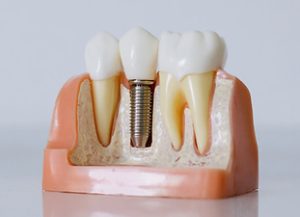
Dental implants are permanent tooth replacements designed to mimic natural teeth in both function and appearance. A small titanium post is surgically placed into the jawbone, acting as a strong foundation for a custom crown, bridge, or denture. This titanium post, known as the implant body, serves as the root portion of the replacement tooth by fusing with the jawbone and providing stability comparable to natural roots.
When Are Dental Implants An Option?
Dental implants are a versatile treatment option for patients who meet the clinical requirements and desire a permanent, stable tooth replacement. They can be used in several scenarios:
- Replacing a Single Missing Tooth: When there is one missing tooth, a single tooth implant is placed to replace at least one tooth without affecting other teeth. Single tooth restorations are individual freestanding units not connected to other teeth or implants, used to replace missing individual teeth.
- Replacing Multiple Missing Teeth: Two or more implants can be used to anchor a fixed dental bridge to replace missing teeth, providing a section of new teeth without impacting other teeth.
- Replacing an Entire Arch (Full-Mouth Restoration): A set number of implants (often four to six, known as All-on-4 or All-on-X techniques) are strategically placed to support a full arch of permanent, non-removable prosthetic teeth or a securely fastened denture (implant-supported overdenture). Implant-supported removable prostheses can effectively replace teeth for patients with extensive tooth loss.
- Stabilizing Loose Dentures: Even a few implants can dramatically improve the stability, retention, and comfort of a removable denture, and can be used to replace missing teeth and provide support for removable prostheses.
Benefits of Implant Dentistry
The advantages of choosing dental implants extend far beyond just aesthetics:
- Prevents Jawbone Loss: The implant post stimulates the jawbone during chewing, a process vital for maintaining bone density. Without this stimulation, the bone resorbs (deteriorates), leading to a sunken facial appearance over time. Having enough bone and healthy tissues, including soft tissue, is essential for successful implant placement and long-term stability.
- Preserves Natural Teeth: Unlike traditional bridges, implants are independent and do not require grinding down healthy neighboring teeth for support, preserving the integrity and enamel of your natural dentition.
- High Longevity and Success: With proper care, the titanium implant post itself can last a lifetime, making it a cost-effective long-term investment compared to dentures or bridges that require more frequent replacement.
- Improved Comfort and Speech: Implants are permanent and never slip or click, eliminating the discomfort and potential speech issues associated with removable dentures.
Candidacy for Dental Implant Surgery
While dental implants are highly successful, the primary requirement is generally sufficient bone volume and density in the jaw to support the implant post, and good overall health. Patients with poor oral hygiene, heavy smokers, and diabetics are at greater risk for complications with dental implants.
Ideal Candidates Typically Have:
- One or more missing teeth.
- A fully developed, healthy jawbone (though bone grafting can address deficiencies).
- Healthy gum tissues, free from active periodontal disease.
- Good general health that allows for minor surgery and healing (uncontrolled diabetes or certain medical conditions may complicate the procedure).
- A commitment to excellent oral hygiene and regular dental visits.
If a patient lacks adequate bone mass (often common in the back upper jaw near the sinus cavity), supplementary procedures likebone grafting or asinus lift may be performed first to rebuild the bone structure and create a viable foundation for the implant. Call our office at (425) 215-0001 to learn more.
The Dental Implant Placement Process
Comprehensive Examination and Planning
This critical first step involves a detailed visual exam, standard X-rays, and often Cone Beam Computed Tomography (CBCT) 3D imaging. This high-resolution scan allows the dentist to map the exact locations of nerves, sinuses, and bone volume, ensuring the implant is precisely placed in the ideal position for both successful integration and final restoration.
Implant Placement Surgery
 During surgery to place the dental implant, your surgeon makes a cut to open your gum and expose the bone. The titanium post is surgically placed into the jawbone under local anesthesia. Once the surgeon places the metal implant post in your jawbone, osseointegration begins. In some cases, a temporary crown may be placed immediately. Short implants may be used as an alternative in cases where there is limited bone height or width.
Osseointegration (Healing Period)
This healing phase, also known as the healing process, is a critical period during which bone healing and osseointegration occur. During this time, the jawbone fuses tightly with the implant surface, establishing the stability and long-term success of the dental implant.
The healing phase for osseointegration can take anywhere from three to nine months, depending on individual healing capacity. The implant fixture is first placed to allow for osseointegration, and once the implant heals, a dental prosthetic is added to complete the restoration.
Abutment Placement (if not placed with the implant)
Once osseointegration is complete, a minor procedure may be needed to expose the implant and attach the abutment—the connector piece. Healing abutments are often placed temporarily at this stage to shape and contour the gum tissue, and to facilitate soft tissue integration before the final prosthesis is attached. After your surgeon places the abutment, your gums must heal for at least two weeks before your general dentist can attach the artificial tooth.
Final Restoration
Impressions or digital scans are taken to custom-fabricate the permanent crown, bridge, or denture. This dental work results in a new artificial tooth being securely attached to the implant, providing a stable and natural-looking replacement. Dental implants are made of materials that follow international consensus standards for safety. This prosthesis is then securely attached to the abutment, completing the restoration.
Aftercare and Maintenance Tips for Dental Implants
Caring for dental implants is similar to caring for your natural teeth, as they are a permanent fixture in your mouth. Excellent hygiene is essential for preventing peri-implantitis (a gum disease specific to implants) and maintaining the health of the surrounding bone and gum tissue. Follow-up care is essential to monitor the healing process and ensure the success of the dental implant.
- Brushing: Brush at least twice a day using a soft-bristle toothbrush and non-abrasive toothpaste.
- Flossing: Regular flossing is vital to remove plaque from around the implant crown. Special implant-specific floss, interdental brushes, or a water flosser are highly recommended to clean the areas beneath the crown and near the gumline.
- Routine Check-ups: Maintain your schedule for professional cleanings and check-ups. The dentist will evaluate the implant, the surrounding bone levels (often with periodic X-rays), and the integrity of the crown.
- Avoid Excessive Force: Refrain from chewing on hard objects like ice or hard candy, as this can damage the final crown, though the implant post itself is extremely durable.