What Is Prosthodontics?
Prosthodontics is a dental specialty focused on restoring and replacing teeth. It includes the diagnosis, treatment planning, rehabilitation, and maintenance of oral function, comfort, appearance, and health for patients with missing, damaged, worn, or deficient teeth.
A prosthodontist has advanced training in complex restorative dentistry, tooth replacement, dental implants, crowns, bridges, dentures, veneers, bite function, and full-mouth reconstruction. In many complex cases, the prosthodontist helps guide the overall treatment plan so each part of the smile works together properly.
You can think of a prosthodontist as the architect of a restored smile: someone who considers the full structure, function, appearance, materials, and long-term durability before treatment begins.
When Should You See a Prosthodontist?
You may benefit from seeing a prosthodontist if your dental needs go beyond routine care. Prosthodontic services may be recommended for patients with:
A prosthodontist can help create a comprehensive treatment plan instead of addressing each problem separately. This is especially important when multiple teeth, the bite, smile aesthetics, and long-term function all need to be considered together.
- Missing teeth
- Severely worn teeth
- Broken, cracked, or damaged teeth
- A failing bite
- Complex cosmetic concerns
- Old restorations that need replacement
- Dentures that feel loose or uncomfortable
- Multiple dental problems that need coordinated treatment
- Interest in dental implants or implant-supported restorations
Diagnostic Wax-Ups
Every successful smile restoration begins with a plan. Diagnostic wax-ups are an important planning tool for cosmetic dentistry, dental restorations, and full-mouth rehabilitation.
Before treatment begins, a series of records may be collected, including photographs, X-rays, intraoral scans, diagnostic models, and bite measurements. These details help the prosthodontist understand the current condition of your teeth, bone, bite, and smile.
A diagnostic wax-up is a model that shows the proposed shape, size, and position of the future teeth. This allows you and your prosthodontist to preview the treatment plan before changes are made to the natural teeth. It also helps guide more precise, predictable treatment.
Dental Implant Restorations
Dental implants are a durable and natural-looking tooth replacement option. While the implant post replaces the tooth root, the restoration is the visible part of the treatment: the crown, bridge, denture, or full-arch prosthesis that attaches to the implant.
As a prosthodontic practice, we focus on designing and restoring implant-supported teeth so they blend with your smile and function comfortably. Each restoration is carefully planned for shape, size, color, bite fit, and long-term stability.
Dental Crowns and Partial Crowns
When a tooth is significantly damaged, weakened, worn, or decayed but can still be saved, a dental crown may be recommended. A crown is a custom-made restoration that covers and protects the visible portion of the tooth while restoring strength, shape, and appearance.
Partial crowns may be used when a tooth needs support but does not require full coverage. These restorations can help preserve more natural tooth structure while improving durability and function.
Porcelain Veneers
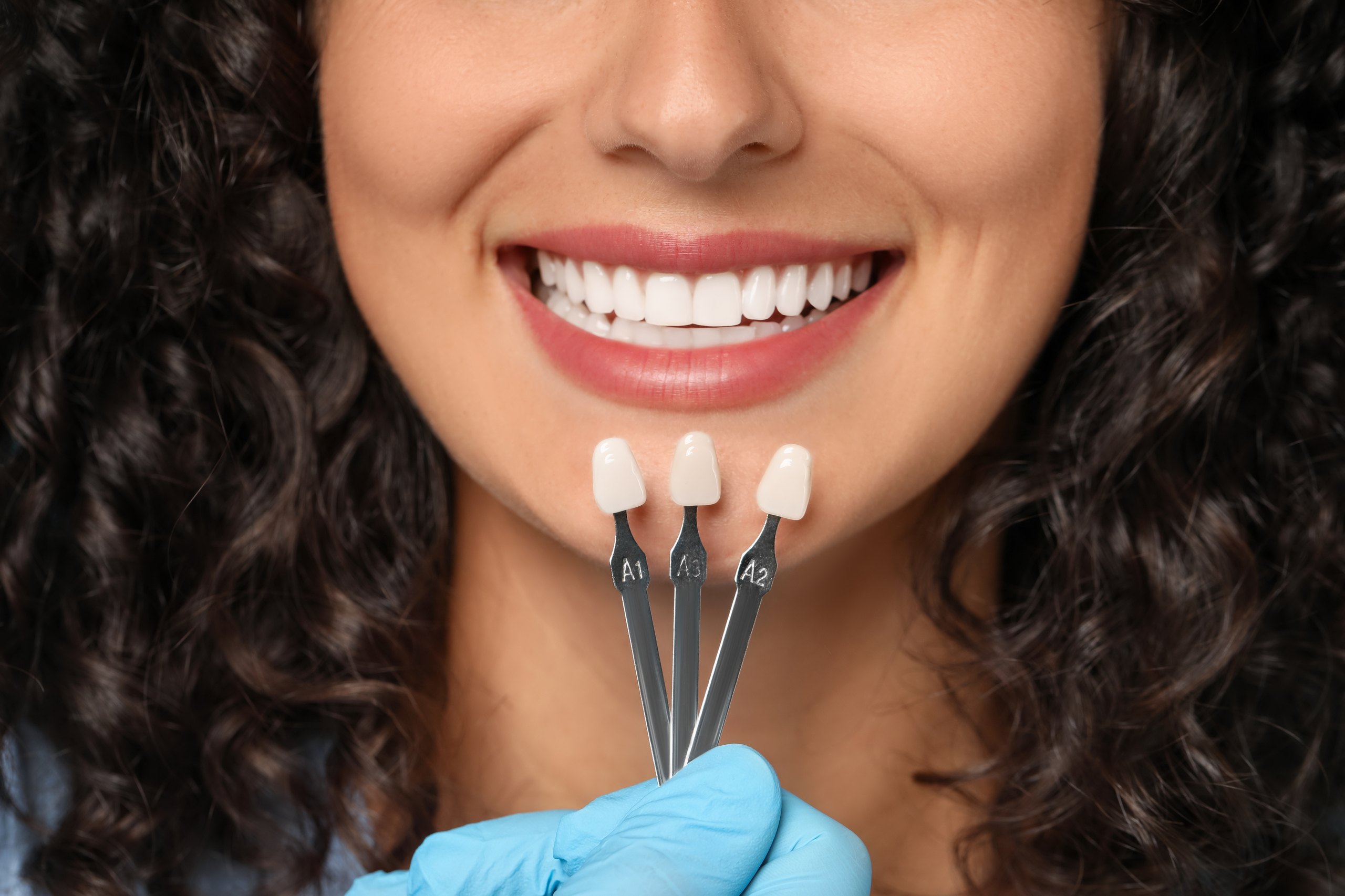
Porcelain veneers are thin, custom-made restorations bonded to the front surfaces of the teeth. They can be used to improve the appearance of teeth affected by discoloration, chips, minor gaps, uneven edges, or slight misalignment.
Veneers are carefully shaped and shaded to harmonize with your facial features and natural smile. Details such as tooth proportion, surface texture, translucency, and color are selected with care to create a result that looks refined but not artificial.
In many cases, veneers require only minimal preparation of the enamel. The goal is to enhance the smile while preserving as much healthy tooth structure as possible.
Teeth in a Day / All-on-4
For patients who need a full arch of teeth replaced, Teeth in a Day or All-on-4 treatment may provide a stable alternative to traditional dentures.
This approach uses strategically placed dental implants to support a full set of replacement teeth. The result is designed to feel more secure than removable dentures and can restore the ability to eat, speak, and smile with greater confidence.
Full-Mouth Rehabilitation
Full-mouth rehabilitation is a comprehensive approach for patients with extensive dental concerns. It may combine multiple treatments, such as crowns, veneers, dental implants, implant restorations, bite correction, and dentures.
The goal is to restore the entire mouth's health, function, comfort, and appearance. Rather than treating one tooth at a time without a larger plan, full-mouth rehabilitation considers how all parts of the smile work together.
Removable Dentures and Partials
Dentures and partials are reliable tooth replacement options for patients missing several teeth or a full arch of teeth.
Complete dentures replace all teeth in an upper or lower arch. Partial dentures fill gaps when some natural teeth remain. Modern dentures are designed to look more natural and feel more comfortable than older styles, with careful attention to fit, function, and appearance.
Snap-On Dentures / Overdentures
Snap-on dentures, also called overdentures, are removable dentures supported by dental implants. The denture attaches to the implants for improved stability compared with traditional removable dentures.
This can help reduce slipping, improve chewing confidence, and offer a middle-ground option between conventional dentures and fixed implant-supported teeth.
Benefits of Prosthodontic Care
Prosthodontic care is designed for patients who need more than routine dentistry.
- Specialized Training — A prosthodontist completes additional specialty training after dental school focused on restoring and replacing teeth, including complex treatment planning, smile aesthetics, dental materials, bite function, implant restorations, and full-mouth rehabilitation.
- Comprehensive Treatment Planning — A prosthodontist looks at the full picture, including tooth condition, bite alignment, smile design, missing teeth, existing restorations, and long-term oral health. This helps avoid patchwork dentistry and supports a more stable, predictable result.
- Function and Aesthetics — Prosthodontic treatment focuses on restoring both appearance and everyday use, including chewing, speaking, smiling, and long-term comfort.
- Advanced Materials and Technology — Prosthodontic treatment often involves careful use of modern dental materials, digital planning, scans, models, and precise restorative techniques to support treatment that is customized, durable, and natural-looking.
- Long-Term Results — A prosthodontist designs treatment with longevity in mind. By considering the entire mouth and how each restoration fits into the larger plan, prosthodontic care can help reduce future complications and support long-term oral health.