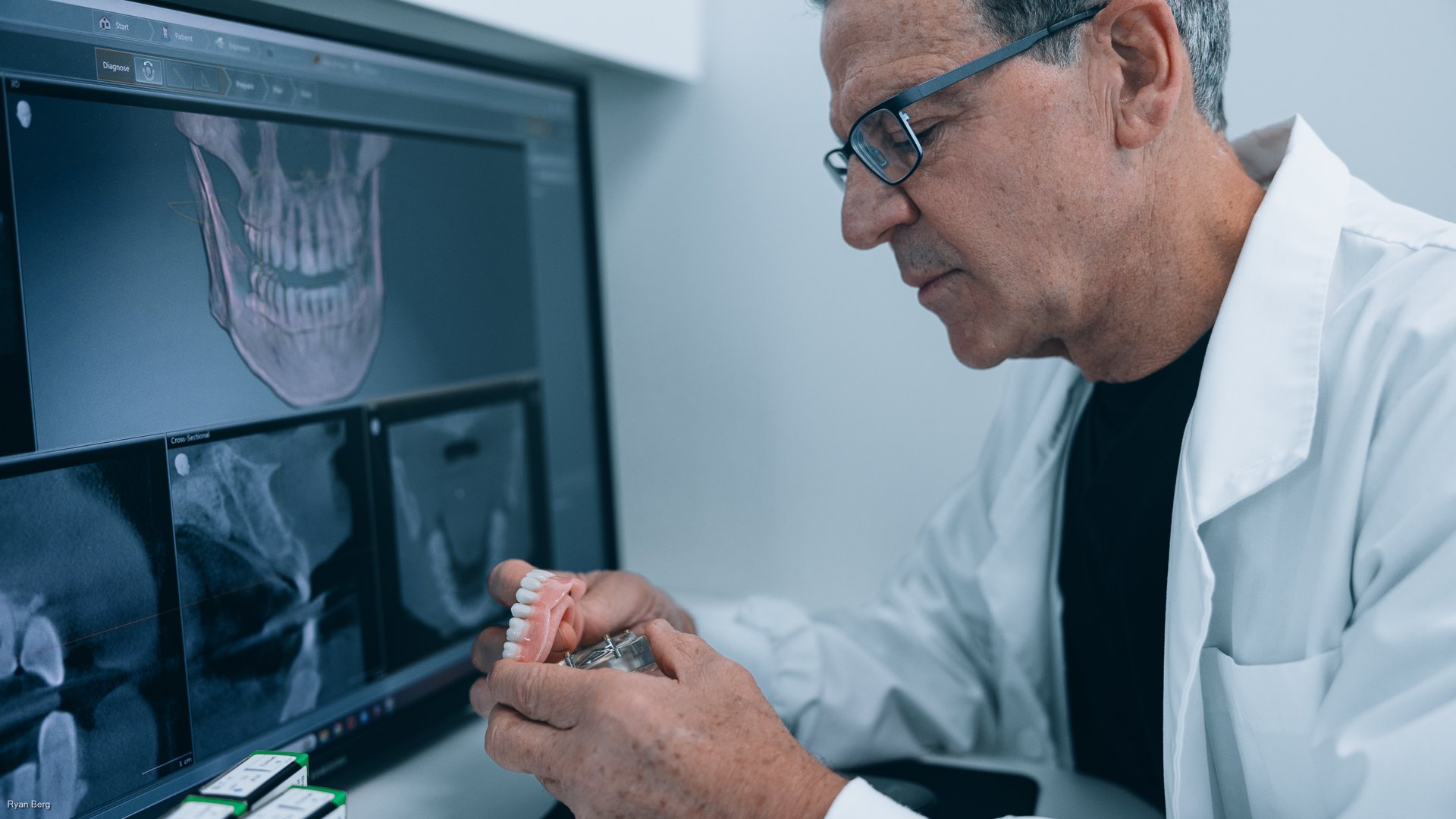
What Is Periodontics?
Periodontics is a dental specialty focused on the prevention, diagnosis, and treatment of periodontal disease, also known as gum disease. Periodontists also provide advanced care for dental implants, bone loss, gum recession, and the structures that support your teeth.
A periodontist has advanced training in the gums, jawbone, periodontal ligament, cementum, and other tissues that keep teeth stable. This specialized training allows them to treat inflammation, infection, tissue loss, bone loss, and complex implant cases with a higher level of precision.
When Should I Visit a Periodontist?
You may benefit from seeing a periodontist if you have signs of gum disease, gum recession, loose teeth, missing teeth, or bone loss. Many patients are referred by their general dentist, but you can also seek periodontal care directly if you notice symptoms such as:
Early treatment can help protect your natural teeth, reduce the risk of further tissue loss, and create a healthier foundation for future restorative care.
- Red, swollen, or tender gums
- Gums that bleed when brushing or flossing
- Persistent bad breath
- Gums pulling away from the teeth
- Tooth sensitivity caused by exposed roots
- Loose, shifting, or separating teeth
- Missing teeth or questions about dental implants
Sedation Dentistry
Dental anxiety is real, and it should not keep you from receiving the care you need. Sedation dentistry can help you feel calmer and more comfortable during periodontal or surgical treatment.
Our team offers sedation options that may include nitrous oxide, oral conscious sedation, and IV sedation. These options are discussed carefully before treatment so you know what to expect and can choose the level of support that feels right for you.
Patient comfort is part of the experience at Plaza Pointe Dental Specialists. During appointments, patients may also have access to amenities such as ceiling-mounted televisions and noise-canceling headphones to help create a calmer, more relaxed visit.
Wisdom Teeth and Surgical Extractions
Wisdom teeth, also called third molars, may need to be removed if they are impacted, painful, infected, or causing crowding. Our practice performs surgical extractions with careful planning, attention to comfort, and a focus on smooth recovery.
Dental Implants
Dental implants are a durable tooth replacement option designed to replace missing tooth roots. A small titanium post is placed in the jawbone, where it can support a custom crown, bridge, or other restoration.
Because implants depend on healthy bone and gum support, a periodontist is especially qualified to evaluate implant readiness, place implants precisely, and help protect the surrounding tissue.
Bone Grafting
Bone loss can occur after tooth loss, trauma, infection, or periodontal disease. If there is not enough jawbone to support a dental implant, bone grafting may be recommended.
Bone grafting adds or rebuilds bone in areas where support has been lost. This can help create a stronger foundation for future implant placement and improve long-term treatment stability.
Sinus Lift
A sinus lift is a specific type of bone grafting procedure used in the upper jaw when there is not enough bone height beneath the sinus to support dental implants.
During the procedure, the sinus membrane is carefully lifted and bone grafting material is placed beneath it. This helps increase available bone in the area and can make implant treatment possible for patients who may not otherwise have enough support.
Gum Grafting
Gum recession can expose the roots of the teeth, leading to sensitivity, higher risk of decay, and changes in the appearance of the smile.
Gum grafting is a periodontal procedure used to cover exposed root surfaces and restore a healthier gumline. Depending on your needs, the graft may use tissue from another area of your mouth or donor tissue. This treatment can help protect the teeth, reduce sensitivity, and improve gumline appearance.
Benefits of Visiting a Periodontic Specialist
Choosing a periodontist means choosing a specialist with advanced training focused on the gums, bone, and structures that support your teeth.
- Advanced Training and Experience — A periodontist has additional training beyond dental school focused on gum disease, bone loss, implant placement, and the treatment of complex periodontal conditions. This allows for more precise diagnosis and treatment planning.
- Comprehensive Implant Care — Dental implants require healthy gum and bone support. A periodontist understands the structures that support implants and can help plan treatment for long-term stability.
- Prevention and Maintenance — Periodontal care does not stop after treatment. Ongoing maintenance visits help monitor gum health, reduce the risk of disease returning, and protect your smile over time.
- Modern Technology and Treatment Planning — Periodontal practices may use advanced tools such as 3D imaging, minimally invasive techniques, and precise surgical planning to support more predictable treatment outcomes.